
What should I eat while on a GLP-1? (And how do GLP-1s even work?)
GLP-1 medications were initially developed to treat type 2 diabetes. They slow the rate at which food leaves the stomach, resulting in a less pronounced rise in blood sugar. They also also improve insulin sensitivity and dramatically reduce appetite, leading to a reduction in food intake.
- What are GLP-1 medications?
- Why are GLP-1 medications prescribed?
- How do GLP-1 medications differ from natural GLP-1?
- What are the side effects of GLP-1 drugs?
- GLP-1 medications and weight loss
- Weight regain is common
- Prioritize protein
- Customize fiber and fat intake
- Don’t trade food noise for food anxiety.
- Get medical supervision
Chances are you know someone who’s taking one of the popular GLP-1 drugs, or you may be taking one yourself. As effective as keto and carnivore diets are for weight loss and improving metabolic health, some folks need a little help getting started and staying consistent. That’s where these drugs can be helpful, but it’s not as simple as getting a prescription and letting the meds work their magic. If you want to keep weight off and keep health issues in remission for the long term, you need to make permanent changes to your diet and lifestyle. Let’s take a closer look at what GLP-1 medications are, how they work, and how to eat so you can maximize the benefits and minimize the drawbacks.
What are GLP-1 medications?
GLP-1 is a hormone your body makes naturally. It’s made primarily in the small intestine, but there are GLP-1 receptors in other parts of the body, including the brain. (The brain also makes its own GLP-1.)
GLP-1 is short for glucagon-like peptide-1. A peptide is a short chain of amino acids, the building blocks of proteins. This is why the initial versions of these medications needed to be injected. If you took them orally, your body would break them down during digestion (the same way it would handle any other protein), and they wouldn’t have the intended pharmacological effects. Oral versions are available now, but the doses are lower and they may not be as effective as injections.
Other types of drugs mimic the actions of GLP-1 plus a second or third hormone. Tirzepatide (Mounjaro, Zepbound) mimics the actions of GLP-1 and GIP (glucose-dependent insulinotropic peptide). Retatrutide mimics the actions of GLP-1, GIP, and glucagon. For the sake of simplicity, most people call all of these “GLP-1s.”
Why are GLP-1 medications prescribed?
GLP-1 medications were initially developed to treat type 2 diabetes. Using them specifically for weight loss is a more recent application. These drugs slow the rate at which food leaves the stomach, which means that glucose enters the bloodstream more slowly, resulting in a less pronounced rise in blood sugar. These medications also improve insulin sensitivity, and the slower gastric emptying coupled with effects on the brain dramatically reduces appetite, leading to a reduction in food intake. Beyond their effects in the GI tract, GLP-1 medications also powerfully affect appetite signaling in the brain. The improved overall metabolic landscape explains why these medications are known to improve conditions associated with insulin resistance, like type 2 diabetes, cardiovascular disease, chronic kidney disease, and, obviously, obesity.
How do GLP-1 medications differ from natural GLP-1?
The main differences between GLP-1 drugs compared to your body’s own GLP-1 (and GIP) is that the drugs are much stronger, and they stay in your body for far longer. The GLP-1 and GIP your body makes are typically secreted specifically in response to food, and they’re degraded quickly. The medications, on the other hand, are active in your body all the time, whether you’ve eaten or not, and they linger for several days, which is why they’re usually injected only once a week. The strength and staying power of the medications make them much more powerful than the natural hormones, but this also explains some of the unwanted side effects.
What are the side effects of GLP-1 drugs?
The most common side effects of GLP-1 medications are gastrointestinal in nature: nausea, vomiting, stomach pain, constipation or diarrhea, bloating, and heartburn. For some people, these are mild and decrease over time. For others, they’re so severe that the medications need to be stopped. In fact, intolerable side effects are among the top reasons cited for discontinuing GLP-1 meds. More serious side effects include gastroparesis (where the muscles in the stomach do not move food properly), bowel obstruction, pancreatitis, and loss of vision.
Not all side-effects are negative, though. Owing to effects of GLP-1 on the brain, these drugs are showing promise for reducing alcohol consumption and cigarette use. They may also be helpful for addressing addictions to other behaviors and substances, like gambling and opioids.
GLP-1 medications and weight loss
Considering the potential for dangerous side effects, people wouldn’t use these drugs if they didn’t deliver beneficial effects, some of them truly life-changing. As mentioned above, these medications can positively impact a growing list of health issues, but their explosion in popularity the last few years comes down to one thing: weight loss.
GLP-1 drugs can be game-changers for people who have a hard time losing weight, even on a keto or carnivore diet. Many people find that keeping carbs to a minimum helps to control hunger and reduce cravings in ways that no other approach did. Not counting calories, not cutting fat, not counting points, and definitely not eating less and moving more. For others, though, going keto or carnivore reduces “food noise” a bit, but not enough for them to stay consistent and get the results they want. They’re still plagued by intrusive thoughts of food, constant hunger, insatiable cravings, and feeling out of control around food—even low-carb food. For these folks, being free of food noise thanks to a GLP-1 can feel like becoming an entirely different person.
Being able to go several hours between meals without hunger and without even thinking of food can feel lifechanging. Being able to focus and be fully present without the ceaseless distraction of food can be genuinely transformative. Unfortunately, these seemingly magical benefits don’t come without a downside: if you’re not careful about how you eat and care for your body, you could ultimately end up heavier than you started.
Are you losing fat or muscle?
Using a scale as your only tool to assess how things are going can trick you into a false sense of security. It’s natural to celebrate when you see your weight going down, but unless you’re getting regular body scans, you can’t be certain how much of the decrease is from body fat and how much is from other tissue—tissue you don’t want to lose, like muscle and bone.
Losing a little bit of lean mass is practically unavoidable during weight loss, but clinical trials of GLP-1 drugs show that some people lose a disproportionate amount of muscle mass. In one study of retatrutide, lean mass accounted for nearly 40% of the total weight lost. Other GLP-1 drugs have similar effects, with muscle accounting for 25% to 39% of the total weight lost. This cannot be emphasized enough: you don’t want to lose weight; you want to lose fat.
Losing a large amount of muscle mass will leave you with a lower metabolic rate, which may be one of the reasons it’s so common to regain weight after stopping these medications. It also may play a role in looking gaunt and unwell—a look that’s come to be called “Ozempic face.”
Weight regain is common
An unfortunate reality in weight loss is that regaining is the norm. The exception is keeping weight off for the long term. One doctor even said that “weight regain is almost inevitable for most people who initially lose weight.”
A meta-analysis of studies that followed subjects after stopping weight loss medications determined that discontinuing the drugs is “followed by rapid weight regain and reversal of beneficial effects on cardiometabolic markers.” So, not only does the weight come back, but the health problems do, too.
To add insult to injury, the weight that comes back isn’t the same as the weight that was lost. What tends to come back is fat, not muscle. This means that your body composition—your physique—will be different, even if you ultimately end up at the same total weight. A greater percentage of your total weight will be fat, so you’ll be larger—that is, you’ll look fatter—at the same weight.
This isn’t meant to scare you. It’s meant to hammer home how important it is to eat in a way that will help you be a long-term success story instead of a regain statistic. And you can be successful if you need to stop a GLP-1 medication due to side effects, financial issues, or problems with availability. At least two studies have shown that keto diets combined with real-time monitoring and professional support have been shown to help people keep weight off and maintain improvements in health.
Prioritize protein
GLP-1 medications reduce appetite, but your drive to eat shouldn’t disappear completely. Your body still needs nutrients. It still needs protein—and you don’t want it to break down your muscle tissue to get it. So, protein needs to be the cornerstone of a diet for someone on a GLP-1 drug. Even when you’re appetite-suppressed, it’s critical to get protein in.
The problem is, it’s not easy to eat when your body is sending signals that it’s already full, or when you’re feeling nauseated, bloated, or constipated. Food in general is the last thing you’d be thinking about, and if you can stomach the thought of eating, a fatty ribeye is probably at the bottom of the list of what appeals.
So, how can you give your body what it needs when food is a major turnoff? Here are some options that may be easier to tolerate when you’d rather not eat at all but you know you need to protect your lean mass:
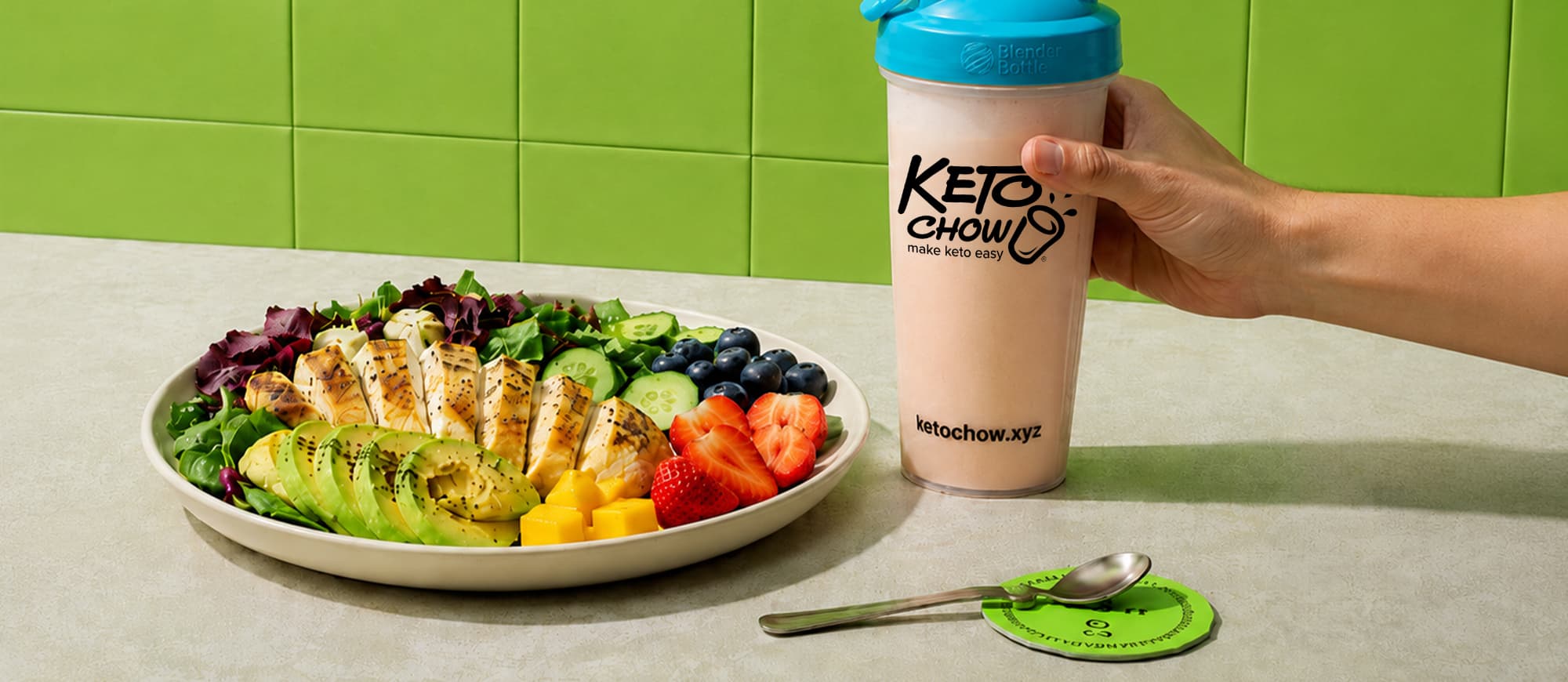
- Keto Chow – ‘nuff said! Even when you’re not hungry, you can probably drink a delicious shake that will give you protein, fat, and essential vitamins and minerals. If too much fat bothers your stomach, make your Keto Chow with more water and less fat. Make a few different flavors so you always have some on hand. Even when food isn’t appealing, you’ll probably find a favorite flavor that you’d be able to take a few sips of.
- Greek yogurt – either plain or doctor it up with berries, chopped nuts and seeds, powdered peanut butter, sugar-free maple syrup, or other low-carb mix-ins. (You could even add some Keto Chow mix and a bit of water. Mix it in well, and you’ve got a delicious, high-protein pudding.)
- Cottage cheese – an OG weight loss food, but unlike back in the 1980s, you’d be eating this to get the protein more so than eating something low-fat! Make it delicious by adding your preferred toppings and mix-ins.
- Gently cooked eggs – one of the best keto protein sources, and one that may be gentler on your stomach than a piece of chicken or a thick-cut pork chop.
- Deli meats – if you don’t have any adverse reactions to the preservatives, sliced turkey, ham, and roast beef are lean sources of protein that may feel easier on your stomach compared to denser meats.
- Canned or pouched seafood – stock up on nonperishables like tuna, salmon, mackerel, and sardines. These are easy go-tos if you don’t feel like cooking, and like deli meats, they may be easier on your digestive system than heavier proteins.
Pro tip: cook a few things in advance. You won’t love the idea of eating when your appetite is suppressed, and the thought of cooking might be even worse. If there are some protein options you can usually stomach even when you don’t feel like eating, prepare large batches ahead of time so you’ll have some options ready without having to deal with the sounds and smells of cooking.
Customize fiber and fat intake
Dietary advice for people on GLP-1 medications typically includes ensuring adequate fiber intake. But the growing numbers of people experiencing success on carnivore diets—with no fiber at all—make it reasonable to question whether fiber is universally helpful. We know that fiber isn’t required in the human diet, but that doesn’t mean it’s never helpful. Some people find that fiber helps keep them regular while it makes others more stopped up.
This may be an individual thing, and you might need to experiment a bit. If you’re not experiencing constipation or diarrhea on a GLP-1 drug, then whatever you’re eating now is working well for you. But if you are dealing with digestive distress, analyze your diet and see if the culprit is more likely to be excessive fiber or inadequate fiber. (In other words, if you’re getting a lot of fiber, cut back and see what happens, and if you’re hardly getting any, increase and see if that helps.) But keep in mind that digestive discomfort on a GLP-1 may have nothing to do with your fiber intake. It may just be the drug exerting its known effects.
Turning to fat, again, listen to your body. Many people on GLP-1 meds find that excessive fat makes them feel queasy. If you’re one of them, stick with leaner proteins, and you’re definitely not a candidate for putting butter in your coffee. You can still eat low-carb; just de-emphasize the “high-fat” aspect of keto. Think chicken breast rather than bunless bacon cheeseburger. Here, too, though, you might find that you do just fine with a higher fat intake. There’s no right or wrong; there’s only what works best for you. And keep in mind that this might change over time. Things that affected you strongly early on might be easier to eat after you’ve been on the medication for a while.
And don’t neglect hydration. For some people, GLP-1 medications can affect sense of thirst, not just hunger. Sip on water or another zero-calorie/zero-sugar beverage throughout the day. Don’t chug a lot of fluid all at once because that may exacerbate the feeling of fullness and make it harder for you to get the protein you need.
Here’s some advice from Dr. Rob Cywes regarding diet for people on GLP-1s: Best Diet For GLP-1 Users.
Don’t trade food noise for food anxiety.
It’s important to get the nutrients you need when you’re on a GLP-1 drug, but don’t obsess over the details. Food noise being gone is a good thing. Don’t replace it with the noise of worrying that you’re not hitting your protein targets every day or worrying that you’ll go into “starvation mode” if you don’t eat enough.
It’s okay if you’re a bit low in protein here and there. Your body isn’t a computer. Focus on the overall picture during the course of a week or so. Some days you’ll eat more and some days less. That’s normal for any human who doesn’t calculate their meals down to the last ounce or gram and turn every meal into a math assignment.
If you’re concerned that you may not be getting what your body needs, consult a nutritionist or dietitian who can help create a plan customized to your goals and preferences.
Get medical supervision
Don’t do things on your own if you’re taking a GLP-1. Guessing is good when you’re watching Jeopardy; it’s not a strategy you want to employ when your health is at stake. Ideally you’ll have a good relationship with the medical professional who prescribes the drug for you. You should feel comfortable asking questions and expressing your concerns. If you’re not getting the support you need, shop around. These are powerful drugs, and you shouldn’t have to fend for yourself.

Amy Berger, MS, CNS, is a U.S. Air Force veteran and Certified Nutrition Specialist who specializes in helping people do “Keto Without the Crazy.”™ She has a master’s degree in human nutrition and writes about a wide range of health and nutrition-related topics, such as insulin, metabolism, weight loss, diabetes, thyroid function, and more. She has presented internationally on these issues and is the author of "The Alzheimer's Antidote: Using a Low-Carb, High-Fat Diet to Fight Alzheimer’s Disease, Memory Loss, and Cognitive Decline," and "The Stall Slayer: Seven Roadblocks to Keto Fat Loss and What to Do About Them."